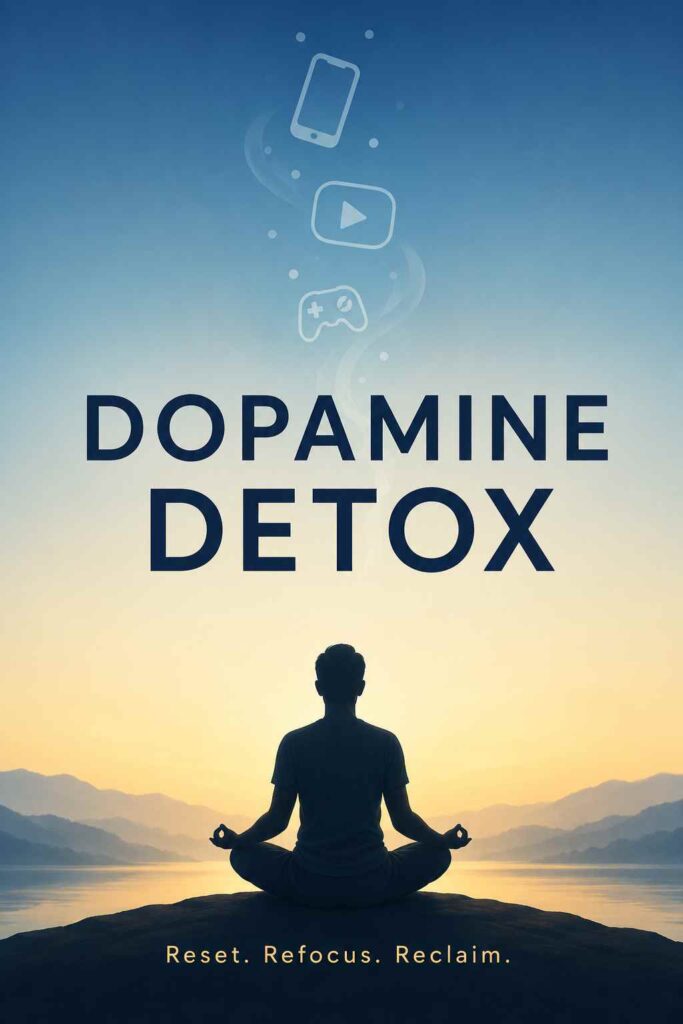
Dopamine Detox written by Thibaut Meurisse is a self-improvement book that explains how dopamine affects our behavior and habits. It describes how modern distractions keep the brain overstimulated, making it harder to focus on important tasks. The book introduces the idea of reducing stimulation to regain control over attention and improve productivity.
PART – I
WHAT IS DOPAMINE?
Dopamine is a “feel-good” chemical in the brain. It is released when we get rewards like social media likes, tasty food, winning a game, good news, or relationships. Its main job is to motivate us to seek rewards.
In Dopamine Detox summary, it is explained that dopamine is not only about pleasure. It is more about “wanting” something than actually enjoying it. For example, a person trying drugs for first time may feel strong pleasure. After the effect is gone, they want to experience that feeling again. Over time, the same amount of the drug no longer gives the same pleasure, so they may take it more often or in larger amounts. So why is it like that?… It is because after we get the reward, the excitement often disappears quickly, and we may want something new.
Today, many things like social media, games, shopping, and videos constantly trigger dopamine. This makes the brain always want more stimulation, which is one of the main ideas explained in Dopamine Detox summary.
PART – II
THE PROBLEM
In Dopamine Detox summary, the author explains when dopamine is released, the stronger the urge becomes to seek another reward. This can lead to addictions, not only to drugs or alcohol, but also to activities such as social media, video games, gambling, and shopping. Companies understand that our attention is valuable, so apps and websites are designed to keep us engaged for as long as possible.
For example, when you watch a certain type of video on YouTube, the algorithm recommends similar videos to keep you hooked. The same applies to other platforms like Facebook, Twitter, and TikTok. They use notifications, likes, comments, and endless video recommendations to capture your attention. Each of these triggers releases dopamine, making it harder to focus on important tasks.
When your brain receives too much stimulation from social media, videos, games, or notifications, normal activities like studying or working start to feel boring. Your mind then pushes you to seek more stimulation. This creates “stimulation traps” that lead to procrastination, pulling you away from the work that truly matters.
The four stimulation traps
1. “I can return to work anytime.”
You think a short break is fine, but it often turns into hours of distraction.
2. “I’ll do it later.”
You keep delaying tasks until they pile up and become harder to complete.
3. “Excitement is the same as fulfillment.”
Scrolling or watching videos feels fun, but the feeling disappears quickly. Real satisfaction comes from meaningful progress.
4. “I’m missing out.”
Fear of missing out makes you check social media constantly, even when it is not necessary
PART – III
DOMPANINE DETOX
A dopamine detox means reducing unnecessary stimulation so your mind can return to a more balanced state. When your brain is less overstimulated, you don’t need intense rewards to feel motivated. Even normal activities like studying or working stop feeling boring.
Types of Dopamine Detox
1. 48-hour complete Dopamine Detox
For 48 hours, you avoid most sources of stimulation, such as alcohol or drugs, internet use, social media, movies and entertainment, video games, sugary or highly processed food, and phone use. Instead, you focus on low-stimulation activities like walking, meditation, journaling, or light reading. After this reset, regular tasks often feel easier and less mentally draining.
2. 24-hour Dopamine Detox
This follows the same rules as the 48-hour detox but lasts only one day. It’s easier to commit to and still helps reduce overstimulation, though the effects may be less powerful.
3. Partial Dopamine Detox
This is the most practical and sustainable approach. Instead of removing everything, you cut out your biggest distraction. For many people, this might be social media, gaming, or YouTube. By removing your main source of overstimulation, you gradually improve focus without needing a full reset.
PART – IV
A THREE-STEP METHOD FOR SUCCESSFUL DOPAMINE DETOX
1. Identify Your Biggest Distractions
First step of Dopamine Detox is to Start by making two lists: things you can do and things you can’t do during your detox. Write down activities that support your goals, such as reading, exercising, journaling, or working on important tasks. Then list the distractions you want to avoid, like social media, YouTube, video games, or constantly checking your phone. Identifying your biggest temptations helps you understand what steals your attention the most.
2. Add friction
Harder something is to access; less likely you are going to do it. So, second method of Dopamine detox is to add “friction” for unwanted habits by turning off notifications, keeping your phone in another room, blocking distracting websites, or logging out of social media. At the same time, reduce friction for productive habits by keeping your workspace organized, opening your work before you begin, or preparing everything you need in advance. When good habits are easier than bad ones, staying focused becomes much simpler.
3. Start Your Day with Low Stimulation
The first hour of your morning sets the tone for the rest of the day. Instead of immediately checking your phone, begin with calming activities such as meditation, stretching, journaling, writing your daily goals, practicing gratitude, or listening to relaxing music. A simple morning routine helps you stay focused and prevents early distractions.
PART – V
DOING THE WORK (AND OVERCOMING PROCASTINATION)
One of the main goals of a dopamine detox is to reduce constant stimulation so that important work feels easier and more rewarding. When your brain is not overloaded with entertainment and distractions, you naturally become more willing to focus on meaningful tasks. In order to do that Author has suggested to do following things:
1. Plan Your Day
Planning your day means deciding in advance what you want to accomplish. Instead of starting the day without direction and reacting to whatever appears, you choose your priorities first.
2.How to Plan your day?
You don’t need any special app to plan your day. A pen and paper are enough. Every morning, write down 3 to 5 important tasks you want to finish. Put them in order, starting with the most important one.
3. Complete the first task before moving to the next.
Choose tasks that make the biggest difference. Ask yourself:
- If I could finish only one task today, which one would have the biggest impact?
- If I had to take the next month off, what is the one task I should finish today?
The tasks that matter most are often the ones you avoid because they seem difficult, boring, or confusing. A dopamine detox can make it easier to start working on them.
4. Work on your biggest task first
The most productive people usually do their most important work early in the day. Before checking emails or social media, finish the task that has the greatest impact on your future.
Productivity comes down to three simple ideas:
- Focus: Give your full attention to one task.
- Consistency: Work on important tasks every day.
- Impact: Spend time on the tasks that move you closer to your long-term goals.
5. Build laser-sharp focus
a. Work at the same place and time every day
Having a regular routine trains your brain to get into work mode. Many successful people, including writers, sit down to work at the same time every day instead of waiting for motivation.
b. Use a trigger
Choose one activity that tells your brain it’s time to work. It could be making tea, drinking coffee, stretching, or meditating. Repeating the same trigger every day makes it easier to begin.
c. Just start
Don’t wait until you feel motivated. Work for just a few minutes. Once you begin, it’s much easier to keep going. Starting creates motivation.
d. Remove distractions
Turn off phone notifications, stay away from social media, and only use the internet if your work requires it. The fewer distractions you have, the easier it is to stay focused.
e. Work without interruptions
Work for about 45 minutes without stopping. Then take a 5 to 10 minute break before starting another session. This helps you stay productive without getting mentally tired.
6. Beware of open systems
Some activities make it very easy to get distracted. These are called open systems because they never really end. Examples include social media, Email, YouTube and Endless internet browsing. If you open one of these first thing in the morning, you can easily lose an hour or more without realizing it.
7. Use closed systems
These leave no room for distraction. It helps you focus on one task only. Examples include Word document, An Excel spreadsheet, A PowerPoint presentation and study notes. Instead of opening social media when you start your day, open the file you need to work on. This makes it much easier to stay focused.
PART – VI
AVOIDING “DOPAMIN RELAPSE”
This is one of the important part in Dopamine Detox summary. It is a real challenge of not going back to old habits. If you are not careful, you might slip back into scrolling, gaming, or constant distractions. That is normal. The goal is to catch it early and fix it. For that Follow the given points:
1. Notice when you are slipping
Pay attention to your behavior. If you find it hard to focus or keep switching between apps, pause and reset. Everyone slips sometimes. It does not mean you failed. Just get back on track.
2. Don’t be too hard on yourself
You will not be focused all the time. Some days you will feel distracted or restless. That is okay. The important thing is not to stay stuck there. Just restart your routine and continue.
3. Understand your environment
Many things around you are designed to grab your attention, like social media, videos, and games. These platforms want you to keep using them because your attention is valuable. So you have two choices: Let distractions control you Or protect your attention and use it for your goals
4. Plan for distractions in advance
Think about what usually distracts you. For example, if you check your phone first thing in the morning, you may end up wasting a lot of time.
So understand the following:
- What will distract me?
- How will I handle it?
This helps you stay prepared.
5. Keep a simple daily system
You don’t need a complicated plan. Just follow a basic daily routine that you can repeat every day. Small, consistent habits work better than big short bursts of motivation.
6. Do calming activities
To balance your brain, do things that make you feel calm and present, like:
- Meditation: Focus on your breathing for a few minutes
- Stretching: Relax your body
- Mindfulness: Pay attention to what you are doing (eating, walking, etc.)
- Walking carefully: Notice sounds, sights, and smells around you
- Talking with people: Spend real time with friends or family
- Doing nothing sometimes: Just sit and let your mind rest
You Can Also learn The Following Summary: