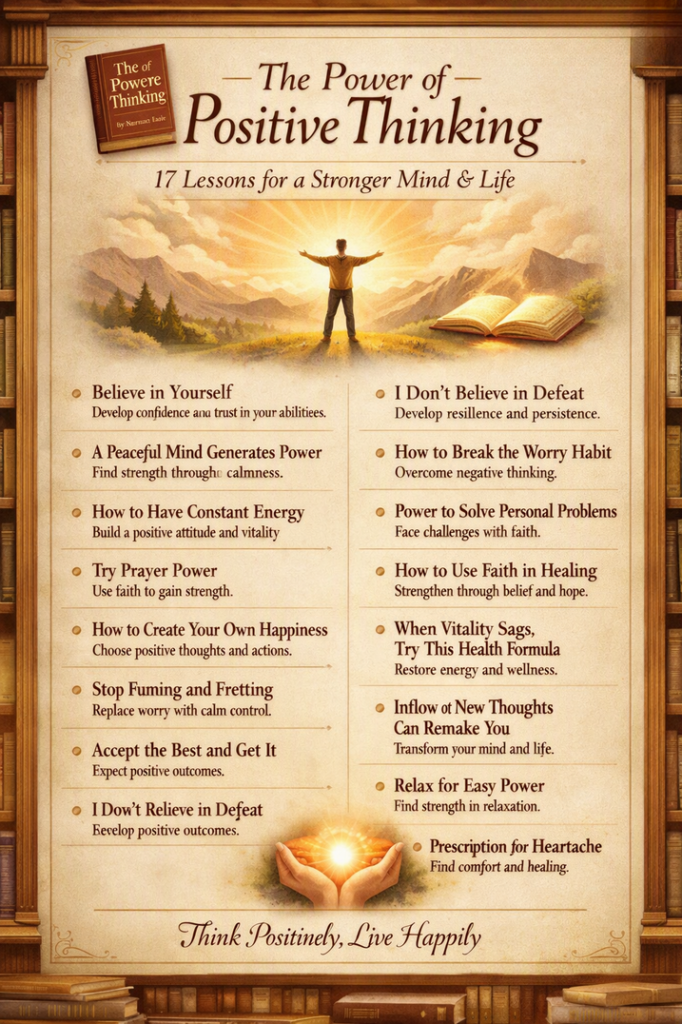
The Power of Positive Thinking covers the key lessons shared by Norman Vincent Peale.The book teaches that having positive thoughts, believing in yourself, and keeping faith can help you deal with problems and reach your goals. Through easy-to-understand advice, real-life stories, and practical tips, Norman Vincent Peale shows how changing the way you think can improve your confidence, relationships, and everyday life.
- Believe in Yourself
- A Peaceful Mind Generates Power
- How to Have Constant Energy
- Try Prayer Power
- How to Create Your Own Happiness
- Stop Fuming and Fretting
- Except the Best and Get It
- I Don’t Believe in Defeat
- How to Break the Worry Habit
- Power to Solve Personal Problems
- How to Use Faith in Healing
- When Vitality Sags, Try This Health Formula
- Inflow of New Thoughts Can Remake You
- Relax for Easy Power
- How to Get People to Like You
- Prescription for Heartache
- How to Draw Upon That Higher Power
CHAPTER – 1
Believe in Yourself
In this chapter of The Power of Positive Thinking summary, the author discusses how many people struggle with inferiority feelings and a lack of self-confidence. They often doubt their abilities, underestimate their potential, and believe they are incapable of achieving their goals. To overcome this, the author has suggested following ways:
1. Create a positive self-image
Visualize yourself succeeding and performing well, even when circumstances are difficult. Avoid imagining failure and instead focus on positive outcomes.
2. Replace negative thoughts with positive ones
Whenever you catch yourself thinking negatively about your abilities, consciously replace those thoughts with encouraging and constructive ones.
3. Keep problems in perspective
Do not exaggerate difficulties or make them seem larger than they really are. Face challenges calmly and solve them one step at a time.
4. Be yourself
Avoid comparing yourself to others or trying to imitate them. Every person is unique, and no one can be a better version of you than yourself.
5. Have faith in God
The author encourages trusting that God is always present to provide guidance and strength during difficult times. Faith can help build courage and confidence.
6. Understand the source of your self-doubt
Take time to identify the reasons behind your lack of confidence. Understanding the root causes can help you address and overcome them.
7. Believe in your potential
Do not place unnecessary limits on your abilities. Have confidence in your capacity to learn, grow, and achieve more than you may currently think possible.
CHAPTER – 2
A Peaceful Mind Generates Power
A calm and peaceful mind can give you more energy, improve your focus, and help you live a happier life. In The Power of Positive Thinking summary, Norman Vincent Peale explains that stress, fear, worry, and guilt can slowly reduce your confidence and mental strength. When your mind is filled with negative thoughts, it becomes harder to make good decisions and enjoy life.
Peale teaches that developing a positive mindset starts with replacing negative thoughts with peaceful and hopeful ones. He shares examples of people who found emotional strength through prayer, inspiring messages, and learning to release their worries. According to him, removing negative thoughts alone is not enough. You need to replace them with positive beliefs, gratitude, hope, and encouraging ideas to create lasting change.
The author also recommends spending a few quiet moments every day to relax your mind. Thinking about peaceful memories, repeating calming words such as “peace,” “serenity,” and “tranquility,” and using positive self-talk can help reduce stress and improve your mental well-being.
One of the key lessons from The Power of Positive Thinking summary is learning to let go of past mistakes. Everyone makes mistakes, but constantly blaming yourself only creates more stress. Instead, accept what happened, learn from the experience, forgive yourself, and focus on moving forward. A peaceful mind allows you to build confidence, overcome challenges, and create a more positive life.
CHAPTER – 3
How to Have Constant Energy
Having constant energy is not only about having a strong body. Your thoughts, emotions, and attitude also influence how energetic and motivated you feel. In The Power of Positive Thinking summary, Norman Vincent Peale explains that the way you think can affect your confidence, motivation, and ability to handle challenges. When you constantly tell yourself that you are tired or incapable, your mind can make you feel even more exhausted. However, positive thoughts, faith, and a clear purpose can help you develop greater inner strength.
According to The Power of Positive Thinking summary, one of the main reasons people lose energy is emotional stress. Feelings such as fear, anger, worry, guilt, and negativity consume mental energy and leave people feeling drained. Peale explains that learning to control negative emotions and creating a peaceful mind can protect your energy and improve your overall happiness.
The chapter also emphasizes the importance of maintaining a balanced lifestyle. Today’s fast-paced world often creates pressure and stress, which can lead to mental exhaustion. Taking time to relax, reflect, enjoy nature, pray, or connect with your personal beliefs can help refresh your mind and restore your energy.
Another important lesson from The Power of Positive Thinking summary is that passion gives people extra energy. When you work toward something meaningful and exciting, you naturally feel more motivated. On the other hand, when you lack purpose or interest, even simple tasks can feel difficult and tiring.
Peale also explains that unresolved problems can quietly drain your energy. Holding on to guilt, fear, and negative emotions creates unnecessary stress. By accepting the past, learning from mistakes, and focusing on positive thoughts, you can free your mind and regain your strength.
CHAPTER – 4
Try Prayer Power
In The Power of Positive Thinking summary, Norman Vincent Peale explains how prayer can help people handle difficulties, reduce stress, and develop a stronger mindset. He describes prayer as more than simply asking for help. It is a way to find peace, confidence, guidance, and emotional strength during challenging moments.
According to Norman Vincent Peale, prayer creates inner strength and helps reduce feelings of fear, anxiety, and worry. When people pray with faith and maintain a positive attitude, they can develop a more peaceful mind. A calm mind allows us to think clearly, find solutions, and face problems with greater confidence.
One of the important ideas discussed in this chapter is the method called “Prayerize, Picturize, and Actualize.” This approach explains how faith and positive thinking can be applied in everyday life.
- Prayerize means making prayer a regular part of your daily routine. Instead of turning to prayer only during difficult situations, Peale suggests using it to discuss your goals, decisions, and concerns. Regular prayer can provide a sense of direction and emotional support.
- Picturize means creating a positive image of the outcome you want to achieve. For example, before an important exam or presentation, imagine yourself staying confident, preparing properly, and performing well. This positive mental image can increase motivation and encourage better actions.
- Actualize means taking practical steps to turn your hopes and prayers into reality. Prayer can provide strength and guidance, but success also requires effort, discipline, and consistent action. Combining faith with hard work helps people move closer to their goals.
The Power of Positive Thinking summary explains that prayer can improve our emotions and relationships. When we practice gratitude and focus on positive thoughts, we become calmer and happier. Praying for others can also develop kindness and shift our attention away from only our own worries.
CHAPTER – 5
How to Create Your Own Happiness
In The Power of Positive Thinking summary, Norman Vincent Peale explains that happiness does not only depend on what happens in life. It depends on how we think and how we respond to situations. Every day, we have a choice: we can focus on problems or choose to notice the good things around us.
A happy person does not have a perfect life. They also face challenges, but they try to stay hopeful and believe that problems can be solved. Developing positive thinking habits, practicing gratitude, and starting the day with good thoughts can improve our mood and attitude.
Peale explains that many people create their own unhappiness through constant worry, complaints, anger, and comparing themselves with others. We may not control every situation, but we can control our reactions. A positive mindset helps us handle difficulties in a better way.
Helping others is another source of happiness. Small acts of kindness and caring for people can create stronger relationships and bring more joy into life.
CHAPTER – 6
Stop Fuming and Fretting
In The Power of Positive Thinking summary, Norman Vincent Peale explains that constant worry, anger, and stress can drain our energy and make life more difficult. Learning to stay calm helps us build strength, confidence, and a happier mindset.
Many people feel stressed because they are always rushing. Peale suggests slowing down and handling life with a peaceful mind instead of feeling pressured all the time. Spending time in nature, resting, and taking quiet moments can help refresh the mind.
The Power of Positive Thinking summary teaches that we should not try to control everything. Accepting help, trusting others, and taking proper rest can create a more balanced life. A relaxed body also leads to a calmer mind, so simple habits like deep breathing, positive thoughts, prayer, and reflection can reduce stress.
CHAPTER – 7
Except the Best and Get It
In The Power of Positive Thinking summary, Norman Vincent Peale explains that expecting good results can improve your confidence and help you achieve your goals. When you always think about failure, fear and doubt can hold you back. But a positive attitude helps you stay focused, motivated, and ready to take action.
The chapter shares the story of a man who faced repeated failures but changed his life by changing his mindset. When he started believing in himself and expecting better outcomes, he gained confidence and moved toward success.
Peale explains that positive thinking does not mean ignoring problems. It means believing that challenges can be solved and having the courage to face them. Faith in God, yourself, and your abilities can give you the strength to continue during difficult times.
The Power of Positive Thinking summary highlights the importance of effort and clear goals. Success comes when you know what you want, work consistently, and give your best. Visualizing success and maintaining a strong belief can help turn dreams into reality.
CHAPTER – 8
I Don’t Believe in Defeat
Norman Vincent Peale explains that defeat often begins in our own minds. When we think we cannot succeed, we create limits for ourselves. Developing the belief that “I don’t believe in defeat” helps us face challenges with confidence and hope.
Peale teaches that successful people do not avoid problems. Instead, they face difficulties with faith, determination, and a positive attitude. A strong mindset helps people find solutions and keep moving forward even during hard times.
The chapter shares examples of people who achieved success because they refused to give up. They believed in their abilities and used faith to stay strong during challenges. Negative thoughts like “I can’t do it” reduce confidence, while positive thoughts create courage and motivation.
The main lesson from The Power of Positive Thinking summary is that many obstacles become harder because of fear and doubt. By believing in yourself, staying positive, and continuing your efforts, you can overcome difficulties and achieve your goals. Remember, a strong mind does not accept defeat.
CHAPTER – 9
How to Break the Worry Habit
Worry is a habit that develops over time, but it can be changed. Constant worrying affects both mental and physical health by creating stress, fear, and anxiety. The solution is to replace worry with faith, positive thoughts, and confidence.
The author suggests emptying your mind of worries every day, especially before sleep, and replacing negative thoughts with positive affirmations. Instead of focusing on fear and failure, imagine success, peace, and strength.
According to the Power of Positive Thinking summary, small worries should be handled before they become bigger problems. Avoid negative conversations and surround yourself with positive people who encourage growth. Starting the day with thoughts like “I believe” can help build confidence and optimism.
CHAPTER – 10
Power to Solve Personal Problems
In The Power of Positive Thinking summary, Norman Vincent Peale explains that problems are a normal part of life, but the way we respond to them determines the outcome. With faith, patience, and a calm mind, we can find better solutions instead of reacting with anger or fear.
Peale explains that we should see God as a partner when facing problems. Instead of carrying all worries alone, people can seek guidance through prayer and reflection. The chapter also shares the story of a businessman who found peace and new ideas after trusting his faith, which helped him improve his business.
Another lesson is that faith can change the way we see challenges. When people replace negative thoughts with confidence and hope, they become more capable of finding solutions. A peaceful mind allows better decisions and clearer thinking.
The chapter suggests these simple steps for solving problems:
- Believe that every problem has a possible solution.
- Stay calm because stress can block good ideas.
- Take time to think instead of rushing decisions.
- Understand the facts before taking action.
- Organize your thoughts clearly.
- Use prayer or quiet reflection for guidance.
- Trust your inner wisdom and positive ideas.
- Spend time in peaceful places to refresh your mind.
- Keep faith while working toward solutions.
- Take action with confidence once you find the right path.
CHAPTER – 11
How to Use Faith in Healing
The Power of Positive Thinking summary explains the relationship between faith, positive thinking, and healing. Norman Vincent Peale argues that faith can play an important role in recovery by giving people hope, peace, and inner strength. However, he emphasizes that faith should work together with medical science, not replace doctors or treatment.
The chapter shares examples of doctors and patients who believed that spiritual faith helped in healing. Peale explains that many physical problems are connected with emotions such as fear, stress, guilt, anger, and resentment. A healthy mind and a peaceful spirit can support the body’s natural ability to recover.
One example describes a man diagnosed with a serious jaw condition who turned to the Bible for comfort and hope. As his faith grew, he became more positive, and his condition improved. Another example shows how letting go of hatred and developing forgiveness helped a person overcome a physical illness.
Peale explains that modern medicine recognizes the connection between the mind and body. Negative emotions can affect health, while faith, hope, and positive thoughts can improve mental and physical well-being.
The chapter suggests that healing involves combining three things:
- Medical treatment from doctors and science.
- Mental strength through positive thoughts and emotional balance.
- Spiritual faith and trust in God.
Peale gives practical advice for dealing with illness:
- Seek medical help while also using spiritual support.
- Pray for doctors and trust their skills.
- Avoid fear and panic because negative thoughts can harm the healing process.
- Surrender worries to God and maintain faith.
- Keep harmony and positivity within the family.
- Visualize health and recovery instead of focusing only on sickness.
- Express gratitude and maintain hope.
CHAPTER – 12
When Vitality Sags, Try This Health Formula
In The Power of Positive Thinking summary, Norman Vincent Peale explains that our thoughts and emotions can strongly influence our physical health. Feelings like fear, guilt, anger, and worry can reduce energy, increase stress, and affect our overall well-being. Along with proper medical care, he believes that faith, prayer, and positive thinking can help bring emotional balance and inner strength.
Peale also explains that long-term stress and negative emotions can affect the body. Worry, resentment, and anger can harm our health, while peace, forgiveness, and positive thoughts can improve our mental and physical condition.
The Power of Positive Thinking summary suggests simple ways to create a healthier mind, such as staying calm, forgiving others, avoiding anger, sharing problems with trusted people, and filling your thoughts with faith and hope.
CHAPTER – 13
Inflow of New Thoughts Can Remake You
In The Power of Positive Thinking summary, Norman Vincent Peale explains that changing the way we think can transform our lives. Our thoughts influence our actions, confidence, and success. Negative thinking creates fear and limitations, while positive thoughts, faith, and hope help us move forward.
Peale shares the example of Guideposts magazine, which faced financial struggles. Instead of focusing on problems, the team imagined success, prayed, and worked with confidence. Their belief and effort helped the magazine grow over time.
Peale explains that positive thinking alone is not enough. It must be combined with hard work, good actions, faith, and persistence. When you believe in your goals and take consistent steps, you increase your chances of success.
The chapter suggests these simple habits for building a positive mindset:
- Speak hopefully and optimistically.
- Continue practicing positive speech every day.
- Feed your mind with uplifting and encouraging ideas.
- Memorize and reflect on inspiring passages.
- Spend more time with positive people.
- Respond to negativity with optimism instead of arguments.
- Pray with gratitude and believe in positive outcomes.
CHAPTER – 14
Relax for Easy Power
Many people live under constant stress and tension, which harms both their physical and mental health. The author argues that true strength comes not from pushing harder but from learning to relax while staying productive.
He shares examples of successful people who remained calm under pressure by slowing down, avoiding unnecessary tension, and taking time for quiet reflection or prayer. According to the author, relaxation is not laziness. It is a way to renew energy, think clearly, and perform better.
One technique he recommends is to relax the body, clear the mind of negative emotions like worry and resentment, and regularly turn your thoughts toward peace and faith. He believes this helps restore emotional balance and makes work feel easier.
The Power of Positive Thinking summary gives 10 practical rules for working with “easy power”:
- Don’t carry the weight of the world on your shoulders.
- Learn to enjoy your work.
- Plan your work and follow your plan.
- Focus on one task at a time.
- Keep a positive attitude toward your work.
- Become skilled and efficient.
- Practice staying physically and mentally relaxed.
- Avoid procrastination.
- Pray or reflect about your work.
- Trust God to help carry your burdens.
CHAPTER – 15
How to Get People to Like You
In The Power of Positive Thinking summary, Norman Vincent Peale explains that everyone wants to be appreciated and accepted by others. However, trying too hard to gain attention or approval does not create real friendships. Instead, we should focus on improving ourselves and becoming a person others feel comfortable around.
Peale explains that likable people are friendly, relaxed, and genuinely interested in others. Many relationship problems happen because people focus too much on themselves. Being proud, judgmental, or constantly talking about yourself can make others feel distant. Showing kindness, listening carefully, and respecting others helps build stronger connections.
The Power of Positive Thinking summary teaches that the best way to make people like us is to sincerely like them first. Remembering names, appreciating others, encouraging them, and making them feel valued can create positive relationships. People naturally feel closer to those who make them feel important.
Peale also highlights the importance of improving our own behavior. Letting go of negativity, anger, criticism, and resentment helps us become more understanding and pleasant to be around. Seeing the good qualities in others can also improve our relationships.
CHAPTER -16
Prescription for Heartache
In The Power of Positive Thinking summary, Norman Vincent Peale explains how people can deal with grief, sadness, and emotional pain. He compares emotional healing to a treatment that helps restore peace and strength after a difficult experience.
The author suggests that people should not stay trapped in painful thoughts. Staying active through work, exercise, walking, or helping others can reduce sadness and bring emotional relief. However, he explains that avoiding pain through meaningless distractions does not provide real healing.
Peale also says that expressing emotions is a normal part of recovery. It is okay to feel sadness, but people should not allow grief to control their entire life. Slowly returning to normal activities, relationships, and responsibilities helps a person move forward while still respecting their memories.
According to Peale, faith and prayer are powerful sources of comfort during difficult times. Trusting God can provide hope, strength, and peace when dealing with loss. Faith helps people accept life’s challenges and find meaning beyond their pain.
CHAPTER – 17
How to Draw Upon That Higher Power
In The Power of Positive Thinking summary, Norman Vincent Peale explains that many people feel stressed, defeated, and discouraged because they try to handle every problem alone. He teaches that faith in a Higher Power can give people strength, peace, and guidance when life becomes difficult.
Peale shares his own experience of feeling exhausted because he was putting too much pressure on himself. He learned that success does not come from constant worry and tension. Hard work is important, but staying calm and trusting God can help people perform better.
The Power of Positive Thinking summary explains that faith creates hope and confidence. When people believe they are supported by God, they become stronger and more positive while facing challenges. Instead of focusing only on problems, they start looking for solutions.
Peale also shares examples of people who improved their lives through prayer, faith, and support from others. These stories show that accepting help and trusting a Higher Power can help people overcome struggles and build a better future.
You Can Also learn The Following Summary: